
1.Introduction: The Magic of the First 24 Hours
The Emotional Connection: More Than Only a Pet
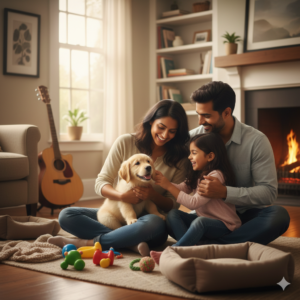
Bringing a new puppy home is a milestone moment that stays etched in your memory forever. It’s an exciting day filled with joy and wagging tails. You’ve likely already picked a name, bought some cute toys, and are ready to love your new best friend. But beyond the fluff and the photos, this day marks the beginning of a profound emotional journey. You aren’t only getting a pet; you’re welcoming a new family member. For years to come, they will look to you for love, safety, and help.
The Puppy’s Perspective: A World-Changing Shift
While you are celebrating, it’s crucial to pause and look through your puppy’s eyes. To them, this isn’t only a “move” it’s a seismic shift in their reality. Before today, all your puppy knew was staying warm with their mom and playing with their siblings.
Now, they are in a strange environment with unfamiliar smells, loud noises, and people they don’t yet know. This transition can be overwhelming and, at times, frightening. When you understand how your puppy feels, you build a bond that lasts forever.
The Goal: A Foundation Built on Trust
The first 24 hours are not about teaching “sit” or “stay”; they are about teaching trust. What happens in these first few hours will set the tone for your entire relationship. Our goal with this guide is to help you navigate this critical window with confidence. A calm start on day one is the secret to a happy life together. It’s the best way to build a bond that can never break.
Let’s ensure that your puppy’s first 24 hours are as perfect as the life you’ve planned for them.
2. Pre-Arrival: Setting the Stage (The Logistics)
The key to a stress-free first day is finishing the “work” before the puppy arrives. If you prepare ahead of time, you can focus completely on your puppy as soon as they get home.
Designating the “Safe Haven”
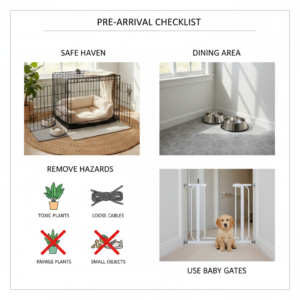
Your puppy needs a place where they feel 100% secure—a “Safe Haven.” This is usually a crate, a playpen, or a high-quality dog bed.
-
Choosing the Spot: Location is everything. Avoid placing the bed in the middle of a busy hallway or right next to a loud television.
-
Why a Quiet Corner? Puppies are with no trouble overstimulated. A quiet corner helps your puppy feel safe while watching the family. This a lot reduces anxiety and helps them settle down for those much-needed naps.
Establishing the “Dining Area”
Consistency starts with the very first meal. Put their food and water bowls in one spot on a floor that’s easy to wipe, like tile or a mat.
-
Accessibility: Put the bowls in a place where your puppy can fast reach them at any time.
Stability: Keeping bowls in the same place helps your puppy learn their way around and feel safe.
The Puppy-Proofing Checklist
Before your puppy arrives, get down on your hands and knees. If it’s at eye level with a puppy, it’s a potential chew toy or hazard.
-
Remove Hazards: *Plants: Common house plants like lilies or ivy can be toxic.
-
Cables: Use cord protectors or tuck them behind furniture to avoid electric shocks.
-
Small Objects: Keep kids’ toys, coins, and shoes off the floor.
-
-
Use Baby Gates: These are your best friend for preventing “sensory overload.” Keep your puppy in only one or two rooms using gates. It makes them feel safe and keeps them away from the stairs and other rooms while they are still learning.
3. The Arrival: The First Hour Protocol
The moment you pull into your driveway with that tiny bundle of fur, your heart will be racing. You’ll want to run inside, show them every room, and introduce them to everyone at once. Hold that thought. The first 60 minutes are the most influential in shaping how your puppy perceives their new home.
The “Potty First” Rule: Start on the Right Foot
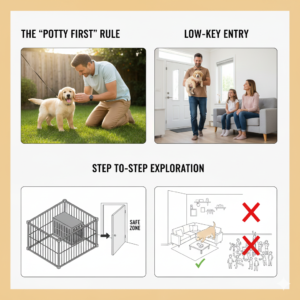
As soon as you get home, take your puppy to the garden so they can go potty first.
- Why it matters: Your puppy has likely had a stressful car journey. A full bladder and a new environment are a recipe for an immediate indoor accident.
- The Psychology: Taking them to go potty outside first shows them exactly where they should go.“This is where we go.”When they succeed, give them calm, gentle praise. It’s their first “win” in their new home.
Low-Key Entry: The Power of Calm
Walking into the house should feel like entering a library, not a surprise party. Don’t use loud or high voices when you’re excited. To a puppy, those sounds can feel like a scary alarm.
- Keep it Chill: Keep your movements slow and your voice low.
- The “No-Touch, No-Talk” Approach: For the first few minutes, only let them exist in the space. Don’t rush to pick them up or crowd them. Give them the gift of silence so they can process the new smells and sights without feeling hunted.
Step-by-Step Exploration: Avoiding Sensory Overload
Imagine getting lost in a big, crowded city. That’s exactly how a puppy feels when you let them run all over a big house. The One-Room Strategy: Start with the room where their “Safe Haven” is at. Let them sniff the corners, the furniture legs, and their bed.
-
Slow Expansion: Once they feel safe and sniffing around, you can no fast open the door to a new room.. If they start to hide, pant, or look wide-eyed, it’s a sign of “sensory overload.” Only take them back to their safe zone.
Remember: You have years to explore the house together. You don’t need to do it all in the first hour.
4. Family & Socialization: Building Bridges
Now comes the part everyone has been waiting for: the introductions. Don’t let the whole family crowd the puppy. Right now, it’s more important to help the puppy feel safe and trust you. If the bridge has many with too much weight too fast, it might crack.
The One-on-One Introduction: Quality Over Quantity
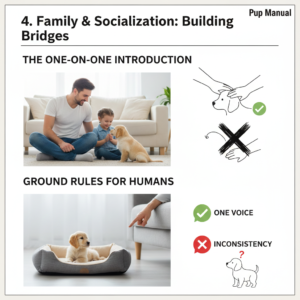
The golden rule here is one person at a time. If you have children, this is especially important.
-
Get Down on Their Level: Ask family members to sit on the floor rather than towering over the puppy. To a 5-pound pup, a standing adult looks like a giant!
-
Let the Puppy Start: Encourage everyone to keep their hands tucked in and wait for the puppy to come to them. When the puppy initiates the sniff, it’s a sign they feel safe.
-
The “Quiet Hands” Rule: Tell children to pet the puppy’s chest with care. Don’t let them reach over the head, as it might frighten the puppy.
Ground Rules for Humans: Consistency is Love
Believe it or not, training the humans is often harder than training the puppy. Before the puppy gets too comfortable, the family needs to be on the same page.
-
The Furniture Debate: Is the puppy allowed on the couch? In your bed? Or only on the floor? There is no “wrong” answer, but there is a “wrong” way to do it—and that’s being inconsistent.
-
One Voice: Everyone needs to follow the same rules. If one person says ‘No’ and another says ‘Yes,’ your puppy will get confused.. Deciding these rules now prevents behavioral issues later. Consistency isn’t being mean; it’s providing the puppy with a clear map of how to succeed.
Managing Guests: The “Closed Door” Policy
You’re going to get a dozen texts: “Can we come see the puppy?!” For the first 48 to 72 hours, your answer should be a polite but firm “Not yet.”
-
The 3-Day Rule: Your puppy needs at least three days to feel safe with you and get used to their new home.
-
Why the Wait?Don’t rush to meet neighbors and friends yet. Let your puppy feel safe with your family first. When they are eating and sleeping well, then you can invite others over.
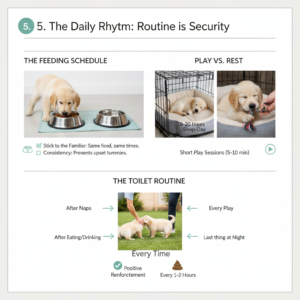
5. The Daily Rhythm: Routine is Security
To a puppy, the world is a series of unpredictable events. A solid routine is the only thing that tells them, “Everything is okay; I know what’s coming next.” A daily routine helps your puppy feel safe and shows their true, happy personality.
The Feeding Schedule: Keeping Tummies Happy
The first day is not the time to experiment with “fancy” organic kibble or home-cooked meals.
-
Stick to the Familiar: In the beginning, keep using the same food and feeding times your puppy knows to.
-
Why the Consistency? Moving homes is stressful enough; a sudden change in diet can lead to an upset stomach (and a messy cleanup for you). If you want to switch their food, wait at least a week until they Feel at home, then do it step by step. For now, familiarity is the best medicine for a nervous tummy.
Play vs. Rest: The 18-20 Hour Sleep Rule
New owners often make the mistake of trying to entertain their puppy all day long. But here is a surprising fact: Puppies are like toddlers; they need an incredible amount of sleep.
-
Naps are Non-Negotiable: A healthy puppy can sleep between 18 to 20 hours a day. If your puppy is nipping and running wild, it usually means they need a nap.
-
Controlled Play: Don’t play for too long. Keep play sessions short, only 5 or 10 minutes, so your puppy doesn’t get too tired. Think of it as “quality over quantity.” When the session is over, lead them back to their safe haven for a nap. Remember, they are growing at a rapid rate, and that takes a massive amount of energy!
The Toilet Routine: The “Every Time” Rule
If you want to master potty training, you have to be more proactive than your puppy. Their bladders are tiny, and their “I have to go” signal is still developing.
-
Frequency is Key: Don’t wait for them to ask. Take them to their spot:
-
Immediately after they wake up from a nap.
-
Within 10–15 minutes of eating or drinking.
-
Right after a play session.
-
-
Positive Reinforcement: When they go potty in the right place, act very happy and give them lots of praise! A small treat and a “Good job!” build a mental map that links the outdoors with success.
6. Surviving the First Night: From Whining to Winning
The sun has gone down, the house is quiet, and now, that adorable puppy sounds like a lonely wolf. For many new owners, the first night is a “baptism by fire.” Don’t forget, your puppy is sleeping without their mother for the first time tonight. They might be a little scared. Here is how you can help them feel safe and quiet instead of lonely.
Here is how you can turn a night of crying into a night of quiet bonding.
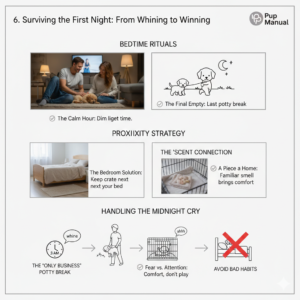
Bedtime Rituals: The Art of Winding Down
Only like a toddler, a puppy can’t go from “full-speed play” to “deep sleep” in a second. You need to signal to their brain that the day is Finally over.
-
The Calm Hour: An hour before you plan to sleep, stop all high-energy games. Dim the lights and lower the volume on the TV.
-
The Final Empty: Take them to their potty spot one last time right before bed. A puppy with an empty bladder is a puppy that sleeps much longer.
Proximity Strategy: Why Being Close Matters
There is an old-school myth that you should put a puppy in a distant room and let them “cry it out.” Please, don’t do this. * Reducing Trauma: Your puppy is afraid of being alone. Isolation on the first night can lead to long-term separation anxiety.
-
The Bedroom Solution: Keep their crate or bed in your bedroom, right next to your bed. Being able to hear you breathe or smell your presence tells them they are safe with their new “pack.” You can move them to another room in a few weeks, but for night one, proximity equals peace.
The “Scent Connection”: A Piece of Home
A puppy’s nose is their strongest link to security.
-
The Magic Blanket: Put a toy or blanket that smells like their mother in their bed. It will help them feel safe.
-
The Comfort Factor: That familiar smell makes them feel safe. It calms them down and helps them fall asleep in their new home.
Handling the Midnight Cry: Comfort vs. Training
At 3:00 AM, you will likely hear a whine. The trick is responding with compassion without by mistakestarting a bad habit.
-
The “Only Business” Potty Break: If they cry, assume they need to go. Carry them out. No “baby talk,” no playing, and no treats. Once they finish, put them straight back to bed.
-
Fear vs. Attention: If your puppy keeps crying, only stay close or say ‘shhh’ to help them feel calm. You are comforting a baby, not “spoiling” a dog. But, avoid the temptation to bring them into your bed to play—that’s a habit that is very hard to break later!
7. Health & Safety: Looking Ahead
On the first day, you should cuddle your puppy and also keep them safe like a bodyguard. Your new friend is vulnerable right now, and their health is completely in your hands. Here is how to keep them safe while their immune system catches up to their curiosity.
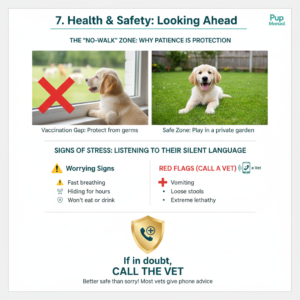
The “No-Walk” Zone: Why Patience is Protection
It’s the biggest temptation in the world: you have a beautiful new puppy and you want to show them off at the local park. But for now, you must resist.
-
The Vaccination Gap: Until your puppy gets all their shots, the outside world can be dangerous. Places where other dogs go might have germs that can make your little one very sick.
The Safe Middle Ground: This doesn’t mean they can’t see the sun! “Let your puppy play in a safe garden where there are no other dogs. Staying home for now helps them grow up healthy and strong.”
Signs of Stress: Listening to Their Silent Language
Since your puppy can’t tell you if they feel sick or overwhelmed, you have to become an expert in their body language. It’s normal for puppies to act a bit weird at first, but keep an eye out for any big problems.
-
It is okay if your puppy is a little shy, doesn’t eat their first meal, or cries a little when you leave the room. They onlyneed time to get used to their new home.
What to Watch For:
-
Worrying Signs: If the room is cool but your puppy is breathing fast or can’t sit still, they might be very stressed.
-
Hiding: If they hide under a chair for many hours and won’t come out, they are feeling overwhelmed.
The Red Flags (Call a Vet):
Call the vet immediately if your puppy is sick, has loose stools, or stops drinking water.
The Golden Rule:
If you feel that something is wrong, only call the vet. It is much better to ask and find out everything is okay than to wait too long. Most vets are happy to give quick advice over the phone!
-
8. Conclusion: A Bond for Life
As the sun sets on your first 24 hours together, take a deep breath. You’ve finally survived the whirlwind! Whether the day was easy or a bit messy with some crying, you made it through the first 24 hours!
Patience and Persistence: The “Completely Imperfect” Start
Here is a little secret every veteran dog owner knows: there is no such thing as a “perfect” first day. There will be an accidental puddle on the rug. There will be a chewed-up slipper. There might even be a moment where you sit on the floor, exhausted, and wonder, “What have I gotten myself into?” That is completely okay. Bringing a puppy home is a massive life change for both of you. Growth isn’t a straight line it’s a series of small wins and messy mistakes. Be as patient with yourself as you are with your new puppy.
The Reward: Building a Confident Soul
By following these steps in the first 24 hours, you have done something very incredible. You did more than only watch a pet. You showed your puppy that they are safe, loved, and home.
The trust you’ve started building today is the foundation for a confident, happy adult dog. One day, you’ll look back at these first 24 hours and realize this was the moment your greatest friendship began.
Let’s Hear From You!
We know how special (and chaotic!) the first day can be.
-
Got a photo? We’d love to see your new family member! Share a picture of your puppy in their “Safe Haven” in the comments below.
Welcome home to your new best friend. The adventure has only begun!
Puppy Parenthood: Your Burning Questions Answered
1. “My puppy hasn’t touched their food. Should I be calling the vet?”
Take a deep breath this is completely normal. Think about how you’d feel in a strange new place where everything is different. You may be wouldn’t feel like eating right away either!
These “new home jitters” can make their tummy feel a bit tight. As long as they’re lapping up some water and their eyes look bright, they’re okay. Try offering the food again in a few hours when the house is quiet. They’ll eat when they feel the “safe” outweighs the “scary.”
2. “Every time they cry, I want to scoop them up. Am I spoiling them?”
This is the ultimate heart-vs-head struggle. In these first 24 hours, you aren’t “training” a dog; you’re comforting a baby. only sit by their bed and let them smell your hand or pet them kindly. This comforts them without you having to take them out.” Let them sniff your fingers or give them a gentle pet without picking them up. You’re teaching them that their bed is a happy place, not a jail cell they need to be “rescued” from.
3. “We’ve already had three accidents on the rug. Am I doing this wrong?”
Welcome to the club! Between the excitement of a new home and a bladder the size of a walnut, accidents are 100% part of the deal. If they go inside, don’t scold them they’ll only learn to be afraid of you, not the rug. Clean the spot with a good cleaner and don’t worry. It is only a rug, and your puppy is still a baby. You’ll get there, promise.
4. “Is it normal for them to sleep THIS much? They’re hardly awake!”
Think of your puppy as a furry little phone with a battery that drains in ten minutes. They play hard, they sniff everything, and then boom the battery is at 0%. Puppies need 18 to 20 hours of sleep to grow those big dog muscles and process everything they learned. If your puppy sleeps well near you, it is a good sign. It means they feel safe and trust you.
5. “I’m dying to show them off! Can we go to the park tomorrow?”
We know, we know they’re the cutest thing ever and you want the world to see! But for now, think of your puppy as being in a “health bubble.” Wait until your puppy has all their vaccinations. Before that, the outside world has too many germs that can make them sick. Stick to your private yard or carry them in a puppy sling to see the sights. Think of it as a VIP exclusive tour before the grand public opening.
6. “I’m exhausted and, To be fair, a little stressed. Is it okay to feel this way?”
Let’s be real: the “Puppy Blues” are a very real thing. The lack of sleep, the constant hovering, and the sudden loss of your “me time” can feel heavy. Don’t feel bad if you feel worried. It is a big change for you too, and it takes time to get used to it. Take a five-minute breather, grab a coffee, and remember: it gets easier. This chaotic phase is only the “tuition fee” for a decade of unconditional love.